


Orchestra
Series Guidelines
SOUND INNOVATIONS
FOR STRING ORCHESTRA
Grades 1–2
Stimulating arrangements that reinforce newly learned notes, bowings, key signatures, rhythmic patterns, and musical terms and symbols. Each selection includes an optional piano accompaniment, Violin III, and a reproducible educational pack.
STRING EXPLORER
Grades 1–2
Correlated with the String Explorer method, the pieces in this series fortify the skills learned by first- and second-year string players. Each selection includes a Violin III part as well as optional piano accompaniment.
STRING ORCHESTRA
Grades 1–4
The grand tradition of Highland/Etling continues in this exciting series of original compositions and arrangements. Written by many of the leading composers of school orchestra music, each selection is carefully graded and edited. Each work is chosen for its musicality, uniqueness, and artistic and educational quality.
FIRST PHILHARMONIC
Grades 1–2
Especially designed with young musicians in mind, this series has everything needed to ensure your students’ first full orchestra experience is both enjoyable and successful. Clear, easy-to-read parts are well bowed and fingered with all measures numbered.
FULL ORCHESTRA
Grades 2–4
This series provides challenging yet very playable arrangements for the full orchestra. A variety of styles are represented, with the emphasis on giving the students the opportunity to experience first-hand the wonders of the symphony orchestra and its literature.

Orchestra
Series Guidelines
VERY BEGINNING
STRING ORCHESTRA
Grade ½
Key Signatures: G, D, plus relative minors
String Instrumentation: Violin I, Violin II/Viola, String Bass, Opt. Piano
Ranges: Vln., Vla., Vc.–no extensions. String Bass–1st position
Special Considerations: Limited slurring, fingerings are suggested where appropriate
Time Signatures: 
Rhythms: 
BEGINNING STRING /
FULL ORCHESTRA
Grades 1–1½
Key Signatures: C, G, D, plus relative minors
String Instrumentation: Violin I, Violin II, Viola / Violin III, Cello, String Bass, Opt. Piano
Ranges: Vln., Vla., Vc. – no extensions (except Violin Lo 1 on the E string) String Bass – 1st and 3rd positions (F-natural on E string)
Wind and Percussion Instrumentation: Flute; Oboe; Clarinet 1, 2; Opt. Bb Bass Clarinet; Bassoon; Opt. Eb Alto Saxophone; F Horn; Trumpet 1, 2; Trombone; Tuba; Mallet Percussion; Timpani; Percussion 1, 2; Opt. Piano; Supplemental Parts for Bb Tenor Saxophone and Eb Baritone Saxophone
Special Considerations: Slurs and ties are included, fingerings and shifting (Bass) are suggested where appropriate
Time Signatures:
Rhythms: 
INTERMEDIATE STRING /
FULL ORCHESTRA
Grades 2–2½
Key Signatures: C, G, D, A, F, B-flat, plus relative minors
String Instrumentation: Violin I, Violin II, Viola / Violin III, Cello, String Bass, Opt. Piano
Ranges: Vln. Vla. Vcl. – 1st through 3rd positions with all extensions; String Bass – 1st through 4th positions
Wind and Percussion Instrumentation: Flute; Oboe; Clarinet 1, 2; Opt. Bb Bass Clarinet; Bassoon; Opt. Eb Alto Saxophone; F Horn; Trumpet 1, 2; Trombone; Tuba; Mallet Percussion; Timpani; Percussion 1, 2; Opt. Piano; Supplemental Parts for Bb Tenor Saxophone and Eb Baritone Saxophone
Special Considerations: Slurred and hooked bowings, double stops, syncopation, fingerings and shifting are suggested where appropriate; optional divisi for extended range
Time Signatures: 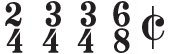
Rhythms: 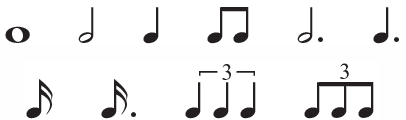
CONCERT STRING /
FULL ORCHESTRA
Grades 3–3½
Key Signatures: C, G, D, A, E, F, B-flat, E-flat, A-flat, plus relative minors
String Instrumentation: Violin I, Violin II, Viola, Cello, String Bass, Opt. Piano
Ranges: All strings – 1st through 5th positions
Wind and Percussion Instrumentation: Flute 1, 2; Oboe; Clarinet 1, 2; Bb Bass Clarinet; Bassoon; F Horn 1, 2; Trumpet 1, 2; Trombone 1, 2; Tuba; Mallet Percussion; Timpani; Percussion 1, 2; Opt. Piano; Supplemental Parts for Bb Tenor Saxophone; Eb Baritone Saxophone
Time Signatures: 
Rhythms: All rhythms
Special Considerations: Fingerings and shifting are suggested where appropriate, optional divisi for extended range.
SYMPHONIC STRING /
FULL ORCHESTRA
Grades 4+
Key Signatures: As needed for content
String Instrumentation: As needed for content
Wind Instrumentation: As needed for content
Time Signatures: As needed for content
Ranges: As needed for content
Rhythms: As needed for content
String Orchestra:
View all
Full Orchestra:
View all

Orchestra
Series Guidelines
DEVELOPING STRINGS
Grades ½–1
Ideal for first- and second-year students, all parts stay in first position, with limited 3rd position work in the bass as pieces approach the intermediate strings series. Entry-level pieces are written in three parts (violin 1, violin 2 / viola, cello/bass). Violin 3 is always included when viola and violin 2 do not already double. Optional piano accompaniment is included and bass is not required.
INTERMEDIATE STRINGS
Grades 2–3
All instruments remain in first position except for bass, which continues to explore basic, introductory shifting. Some chromatics are introduced (fingerings are provided where necessary). Violin 3 continues to be included along with an optional piano accompaniment. Bass still largely doubles cello but begins to have some independence (reinforced in piano).

SYMPHONY STRINGS
Grades 3+
While musically appropriate for a wide range of levels, grade 3 pieces continue to include violin 3 to reinforce viola. Bass becomes a fully independent voice and piano is no longer included unless part of the orchestration. Third position and all extensions are used as needed, with extended techniques used as pedagogically appropriate for the grade level.
FULL ORCHESTRA
Grades 2–3
In addition to standard full orchestra instrumentation with reduced winds, optional parts are available for band instruments not traditionally included in the orchestra. These doublings enable orchestras with instrumentation challenges to be successful.
SYMPHONY ORCHESTRA
Grades 4+
Ideal for high school, college, and community groups, this series has a slightly expanded wind section compared to the full orchestra series. Optional parts that double critical instruments are still available and key instruments are cross-cued whenever possible. These works are ideal as both a bridge and companion to major works in the orchestral repertoire.
Stay Updated
Want to get the latest updates and special offers from Alfred Music?